
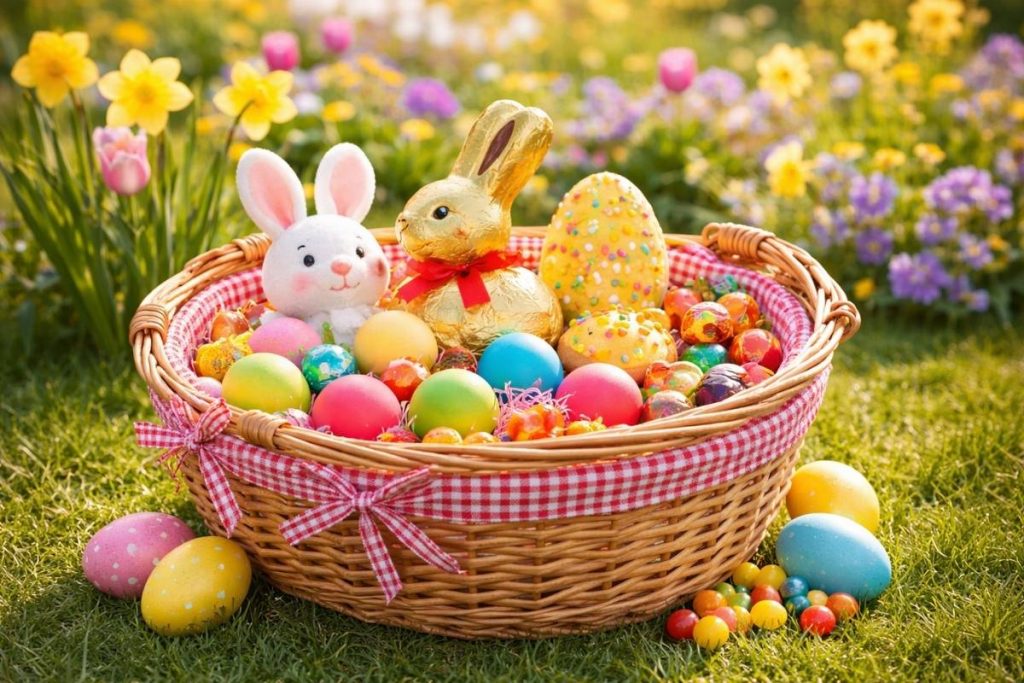
Not every Easter basket works in every space.
Some feel too busy, others too empty, and many don’t match the overall decor.
The difference usually comes down to choosing a clear style and building everything around it.
These basket styles focus on simple, cohesive combinations that feel intentional rather than assembled.
Affiliate links included. I may earn a commission at no extra cost to you.
Table of Contents
Browse the essentials used in these basket
Simple elements that make each style feel cohesive:
1. Minimal Neutral Basket
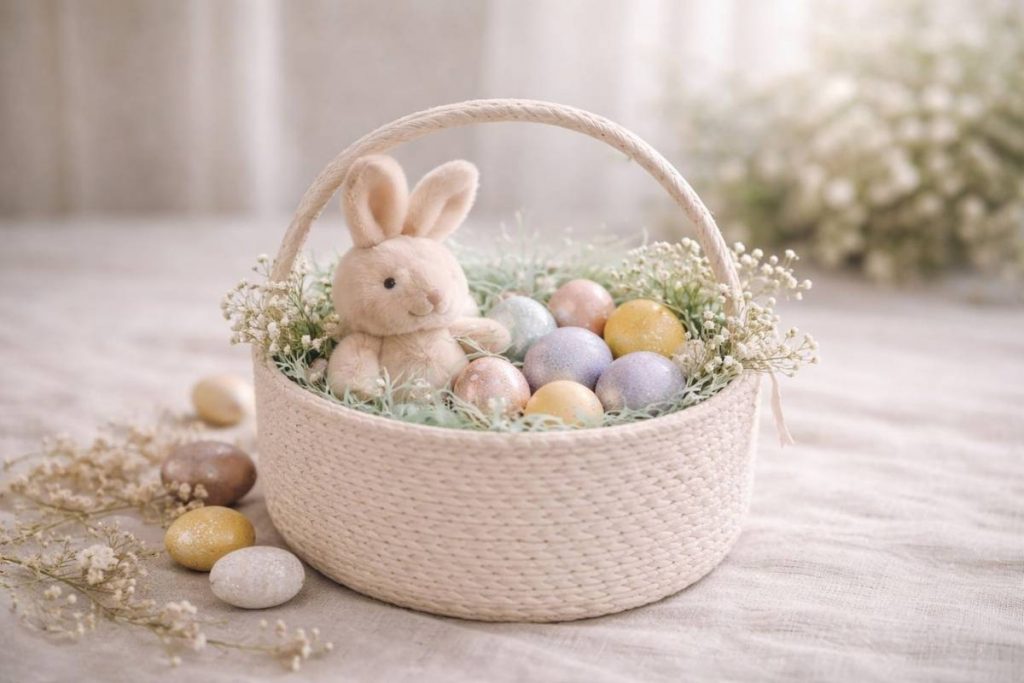
This style focuses on restraint and balance.
A neutral basket paired with a soft base layer creates a calm foundation. Instead of filling the space, only a few selected elements are placed with intention.
A light woven basket combined with a linen or cotton insert keeps everything visually quiet, while a small ceramic object or subtle decorative piece adds structure without distraction.
This approach works best when nothing competes for attention.
2. Soft Pastel Basket
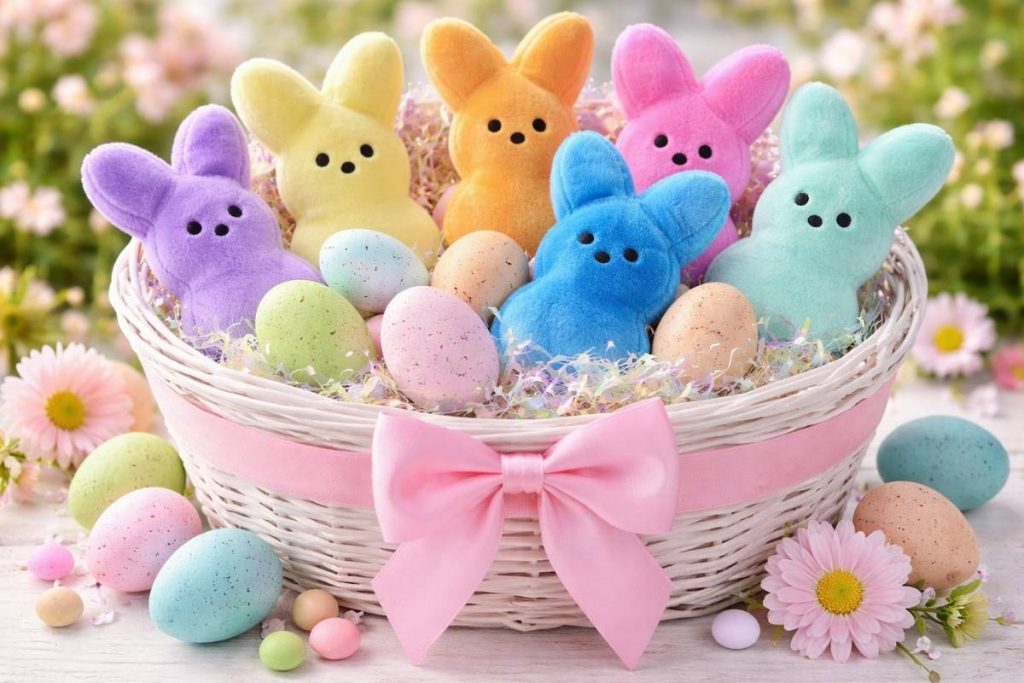
A softer interpretation of classic Easter colors.
Instead of mixing multiple bright tones, this style uses a controlled palette such as soft pink, muted blue, or warm cream. The basket itself can stay neutral, while the contents introduce gentle color.
Paper grass in pastel shades or lightly colored fabric helps unify the elements. Small decorative items in matching tones keep the basket cohesive without feeling repetitive.
The key is consistency in color rather than variety.
See the pieces behind these basket styles
Small details that change how everything comes together:
3. Fluffy Bunny Basket
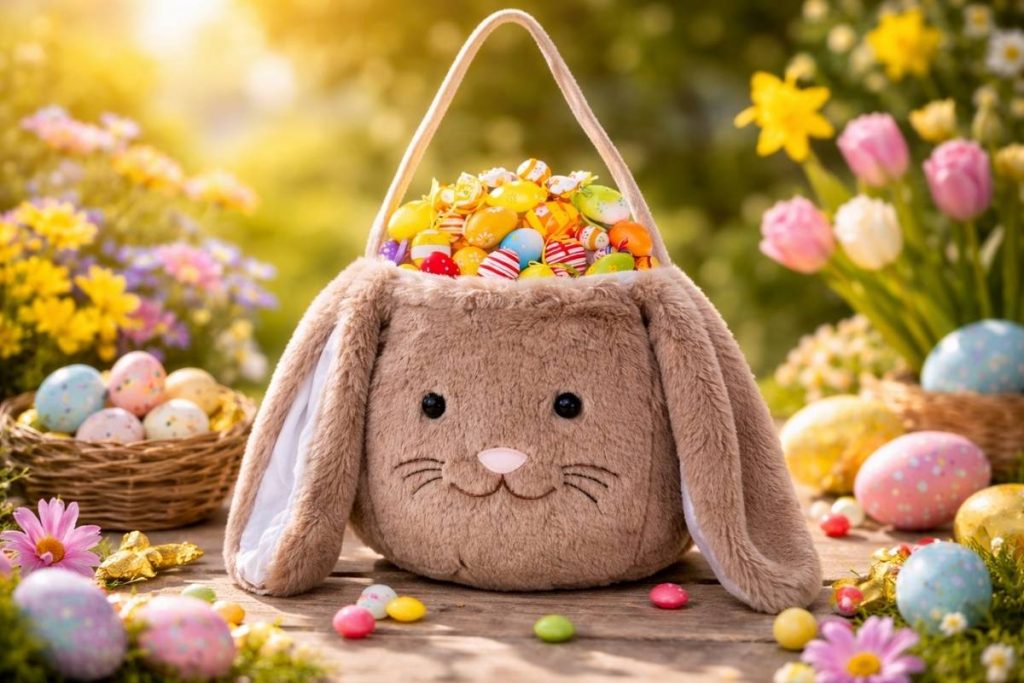
A bunny basket creates an immediate focal point through a soft, recognizable shape.
Instead of relying on many small elements, this style works because one piece naturally draws attention and gives the basket a clear identity.
The key is to keep everything else minimal so the bunny element can stand out without feeling overwhelming.
Soft textures, neutral tones, and a balanced filler layer help the basket feel intentional rather than crowded. See more⬈
4. Kids Basket (Clean Version)
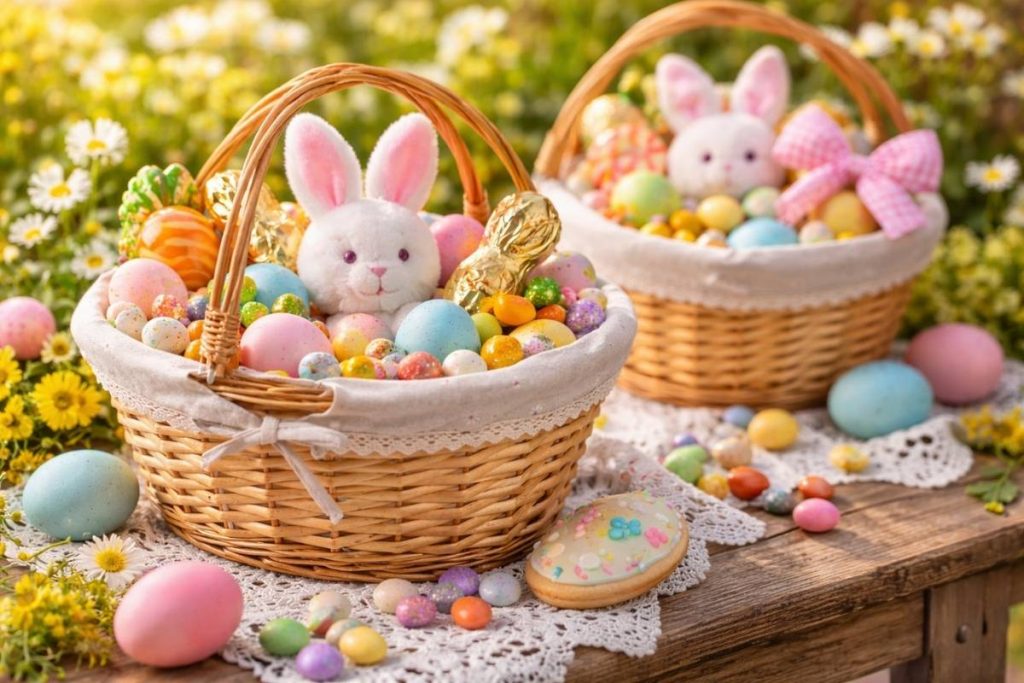
A simplified version of a traditional children’s basket.
Instead of filling the basket with many small items, this approach focuses on fewer, more visible elements. This keeps the basket structured and easier to visually process.
A slightly larger basket with a soft filler base allows space between items. A few carefully chosen objects, such as one plush figure and a small number of treats, create a clearer composition.
The result feels intentional without losing the playful aspect.
5. Gift-Style Basket
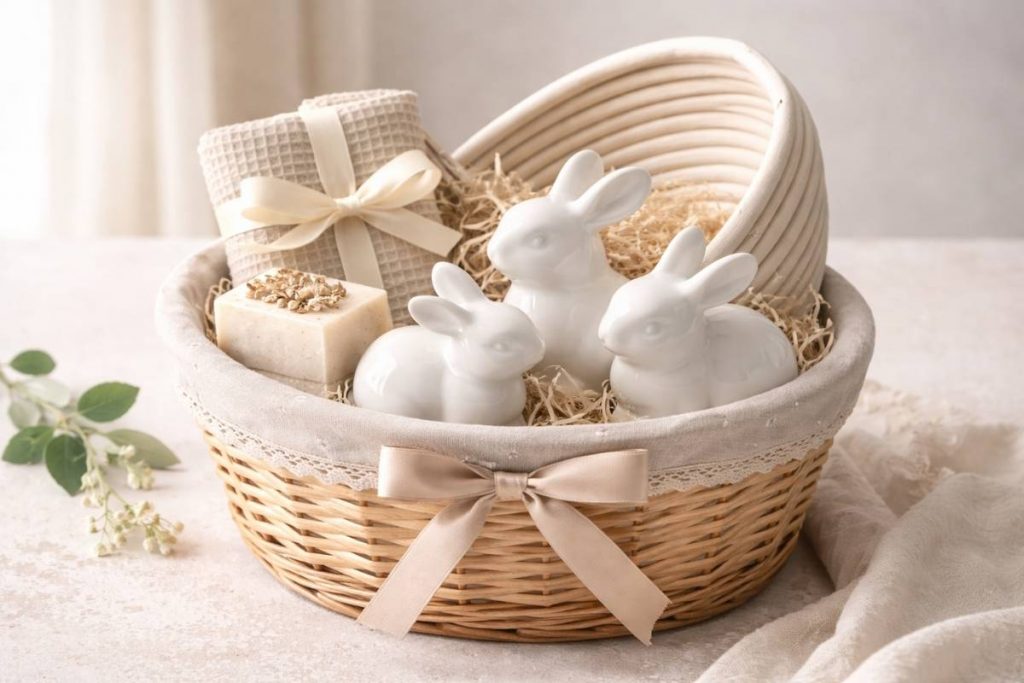
More structured and refined, closer to a curated gift than a seasonal decoration.
The arrangement is tighter, with fewer elements placed deliberately. A structured basket or box works well here, helping everything stay aligned.
Neutral tones, subtle textures, and one or two higher-quality items create a more elevated look. A soft ribbon or fabric detail can unify the composition without drawing too much attention.
This style relies on precision rather than volume.
Explore the items that make these baskets work
Fewer, better-chosen elements create a more refined look:
6. Floral Basket
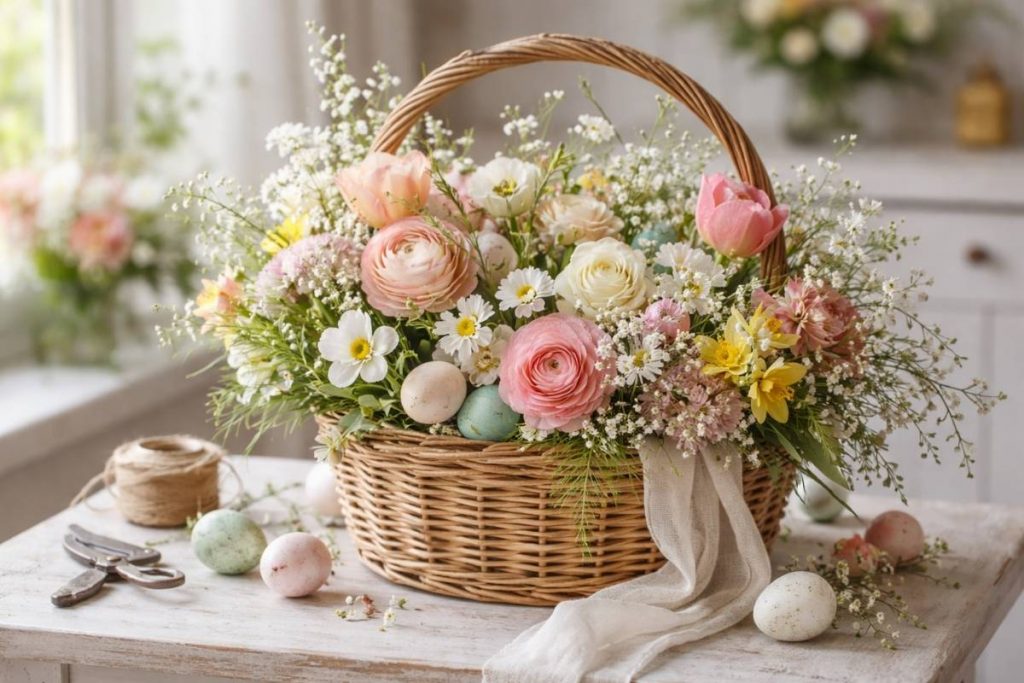
In this style, the focus shifts from objects to natural elements.
Flowers become the main visual feature, while everything else supports them. The basket acts as a base rather than the center of attention.
A simple basket combined with fresh or dried flowers creates a soft, seasonal look. Additional items should be minimal, allowing the floral element to define the arrangement.
Placement slightly off-center helps create a more natural flow.
7. Modern Decorative Basket
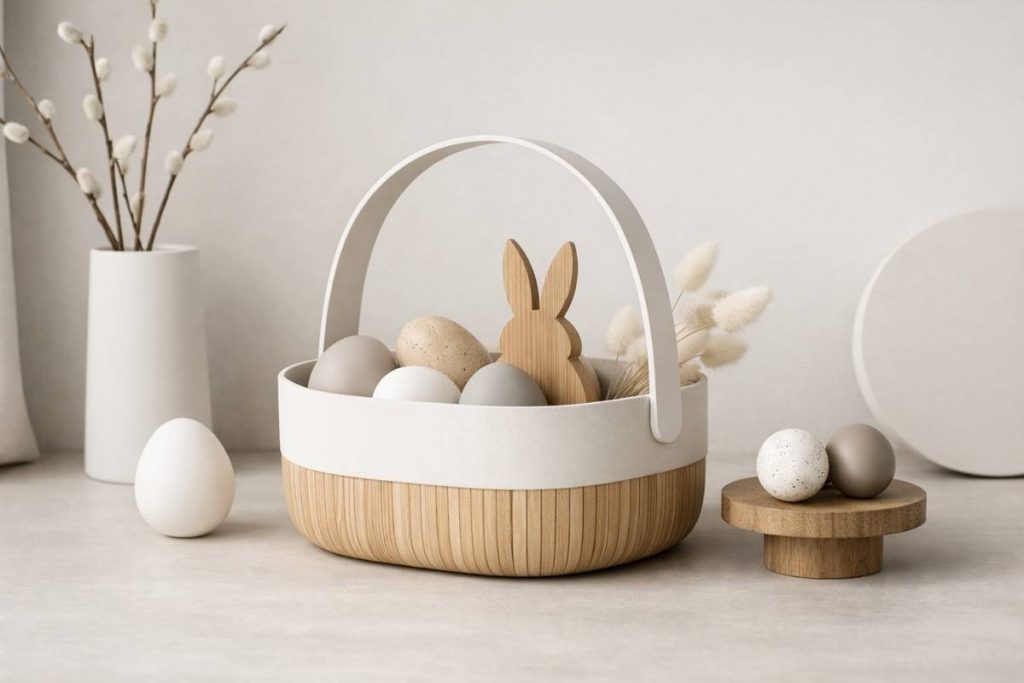
A more design-focused approach, where the basket becomes part of the interior rather than just seasonal decor.
Clean shapes, controlled spacing, and a limited number of elements define this style. The arrangement often feels more like a styled object than a functional basket.
A structured basket paired with a few carefully selected pieces creates a strong visual identity. Neutral tones or a very limited color palette help maintain clarity.
Negative space plays an important role here.
Essential Elements Across All Styles
While each basket type differs in style, the underlying structure remains consistent:
• a defined base (basket or container)
• a controlled filler layer
• one primary visual element
• a few supporting pieces
• space between items
These elements create balance and prevent the basket from feeling random or overloaded.
Browse all essentials used across these basket ideas
Everything used to create a clean and cohesive Easter look:
- Basket
- Grass / Liner
- Bunny Basket
- Pastel Eggs
- Soft filler
- neutral decor piece
- premium basket
- linen liner
- ceramic bunny
Final Note
Most Easter baskets feel off not because of the items themselves, but because too many elements compete within a limited space.
Choosing a clear style and reducing the number of components leads to a more cohesive and visually calm result.