
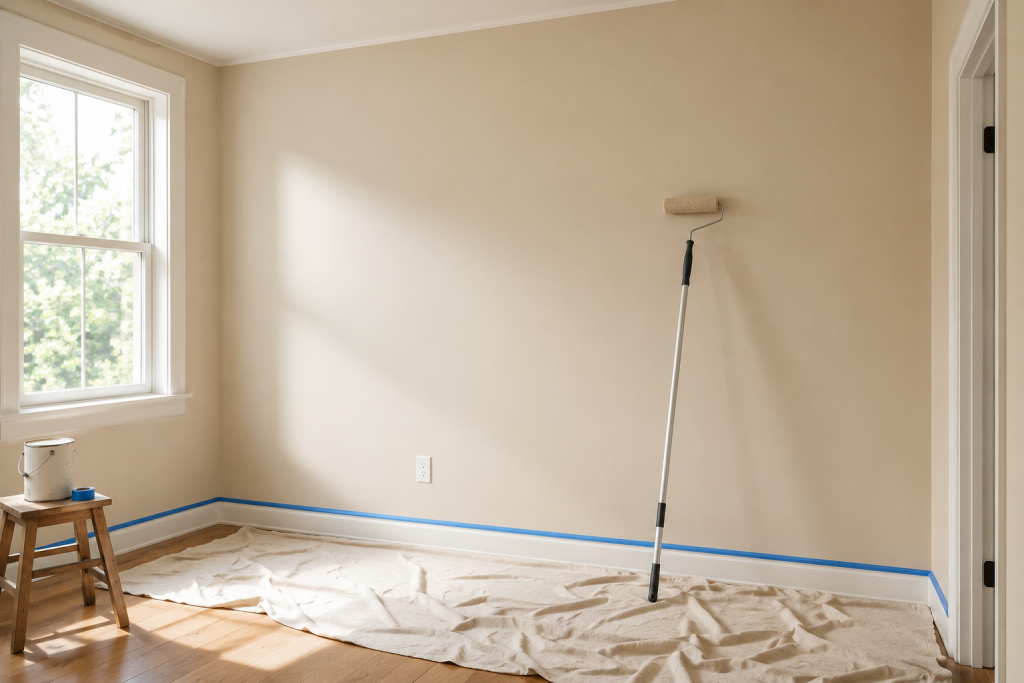
Painting a room feels intimidating — but it's the single cheapest way to completely transform a space.
The problem isn't the color.
It's not having the right tools and not knowing the right order.
This guide walks you through:
– how to choose the right color for each room
– the exact tools that make painting easy
– the step-by-step process pros use
– the mistakes that ruin a paint jobype your paragraph here
Why the Right Tools Matter More Than the Paint
Most failed paint jobs aren't about the color — they're about the tools.
Cheap brushes leave streaks. The wrong roller leaves texture. No tape means messy edges.
The good news: a handful of inexpensive tools makes the difference between a patchy DIY look and a clean, professional finish.
Affiliate links included. I may earn a commission at no extra cost to you
How to Choose the Right Wall Color
Before you buy a single can, get this right:
Test the color in YOUR light. A color looks completely different in a north-facing room versus afternoon sun. Always test before committing.
Consider the room size. – Light colors (warm white, soft beige) make small rooms feel bigger – Deep colors (charcoal, forest green) make large rooms feel cozy and intimate
Stick to a whole-house color scheme. Pick 2–3 core colors that flow from room to room. This makes your whole home feel calm and intentional instead of chaotic.
The easiest way to test: peel-and-stick paint samples. You stick them on the wall, move them around the room, and see the real color in real light — no mess, no half-empty sample cans.
See Peel & Stick Paint Samples ➚
Color Ideas for Every Room
Bedroom — calm & restful Soft sage, warm greige, muted clay. Colors that lower the energy and help you relax.
Living Room — warm & inviting Warm white, soft beige, gentle taupe. Neutral tones that make the space feel open and cozy.
Kitchen — bright & clean Crisp white, pale grey, soft cream. Light colors that keep the space feeling fresh.
Bathroom — spa-like Pale blue-grey, soft white, eucalyptus green. Calming tones that turn your bathroom into a retreat.
Home Office — focused Muted green, warm grey, soft navy. Grounding colors that help concentration.
The Tools You Need to Paint Like a Pro
This is everything you need for a clean, professional finish — most of it under $20.
1. Premium Brush & Roller Set
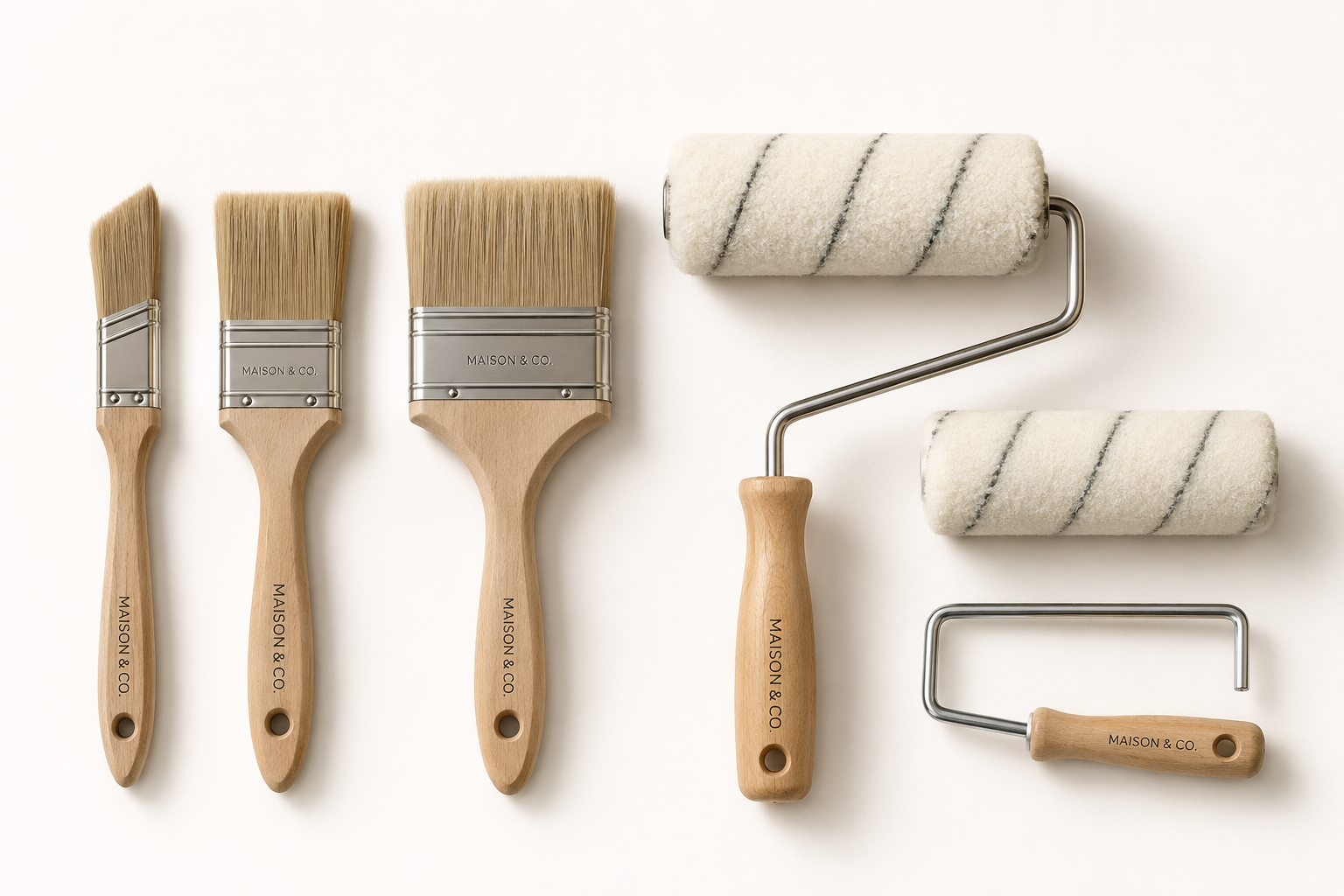
The foundation of any paint job.
A quality brush and roller set gives you smooth, even coverage without streaks or shedding bristles.
Look for:
– an angled brush for cutting in edges
– a medium-nap roller for most walls
– a sturdy roller frame
2. Painter's Tape
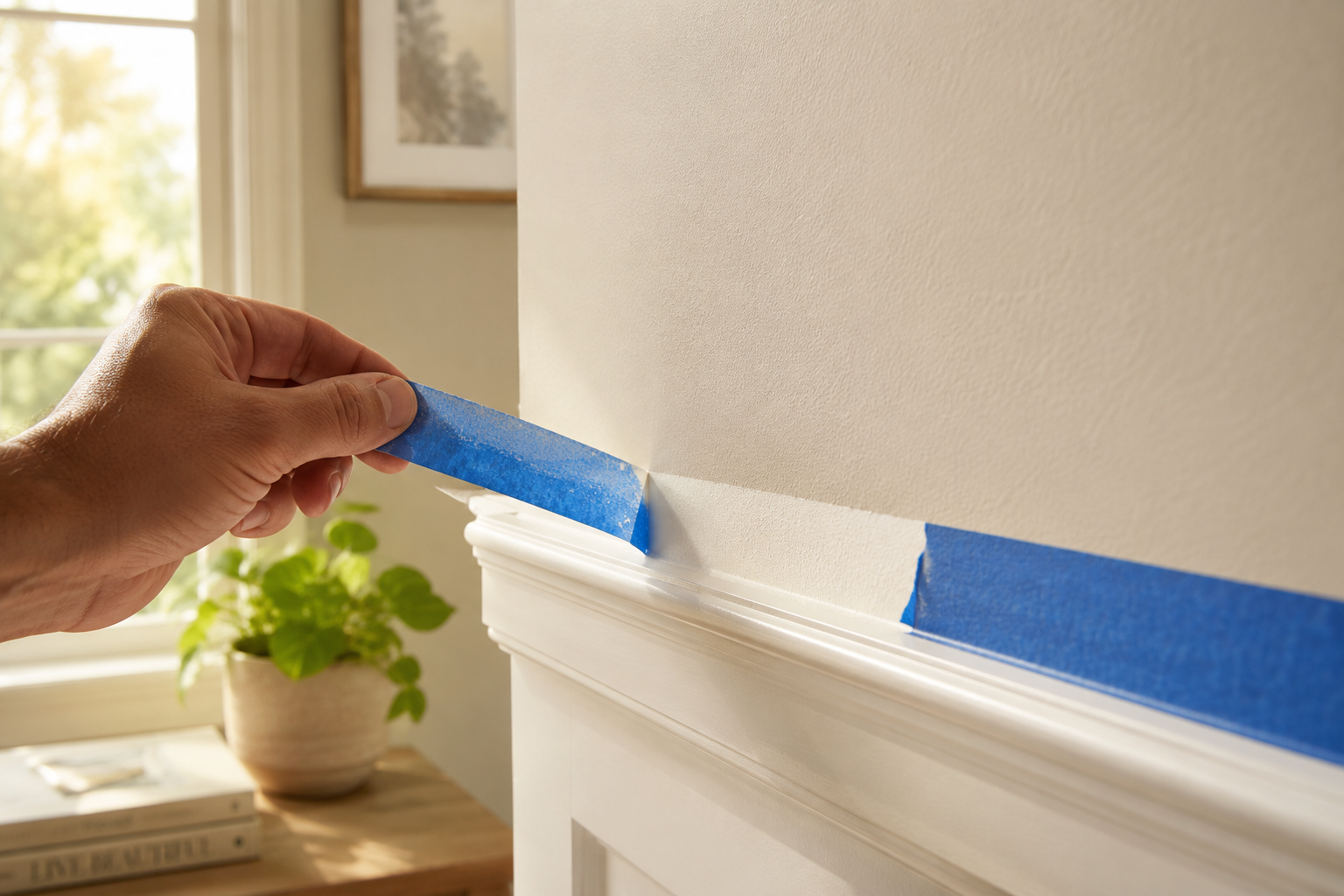
The secret to crisp, clean edges.
Good painter's tape seals tight so paint doesn't bleed under it — giving you sharp lines around trim, ceilings and windows.
Tip: remove it while the paint is still slightly wet for the cleanest edge.
3. Drop Cloth / Floor Protection
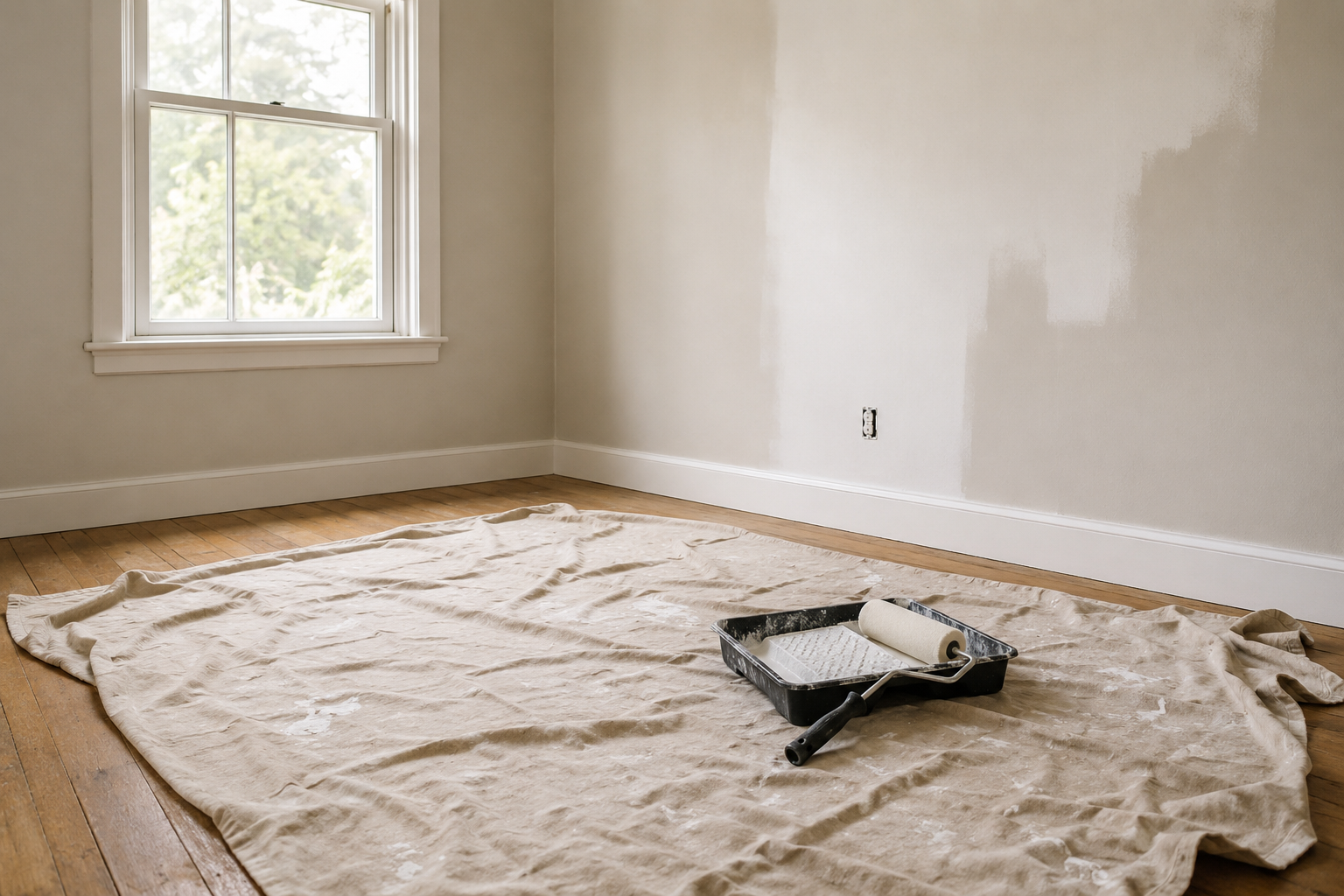
Protect your floors and furniture.
A canvas drop cloth catches drips and spills, so you're not scrubbing paint off your floor later. Reusable and far better than newspaper.
4. Paint Tray with Liners
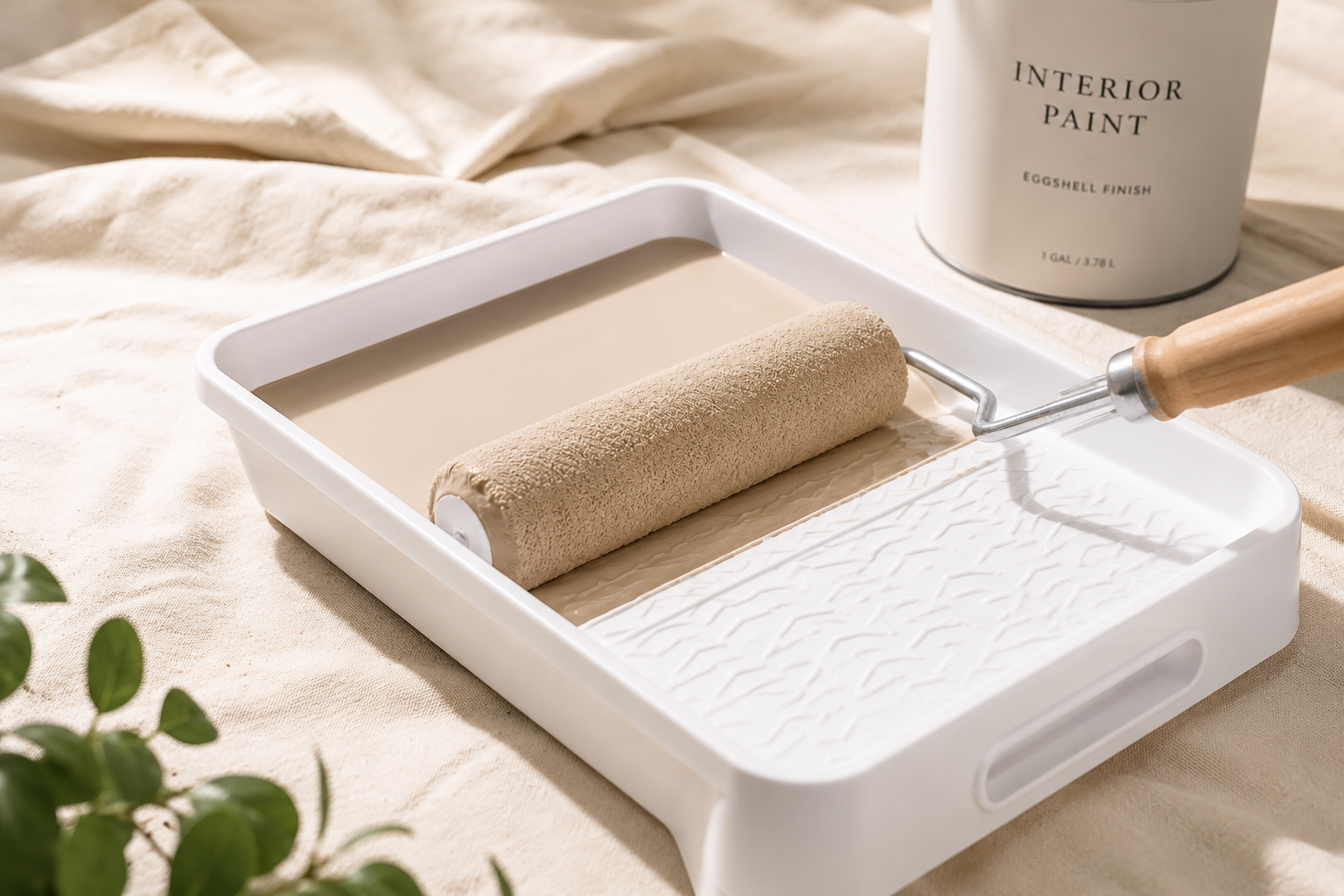
Simple, cheap, essential.
A paint tray with disposable liners makes loading your roller easy — and cleanup takes seconds. Just toss the liner when you're done.
5. Extension Pole
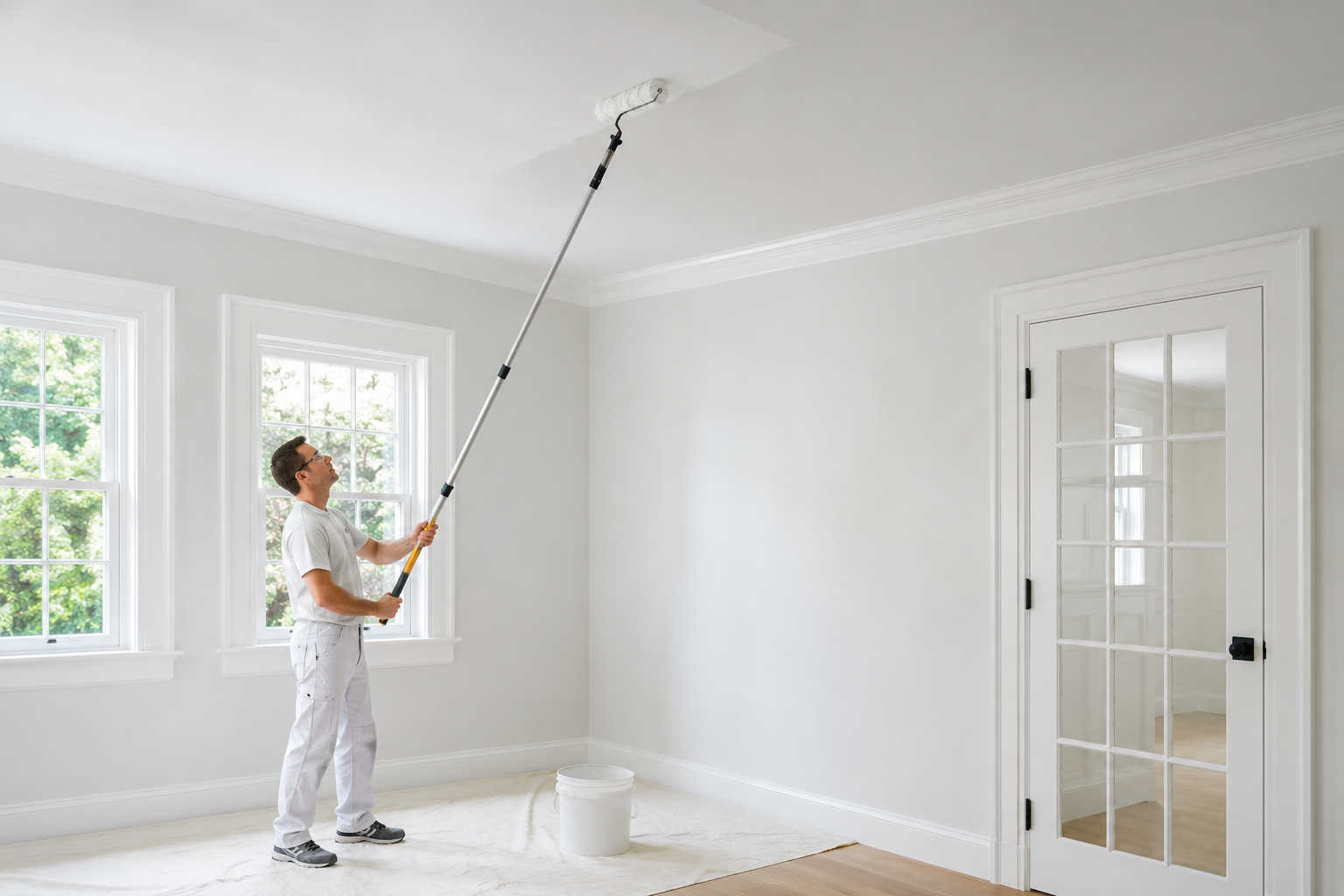
Save your back and reach high walls.
A telescoping extension pole screws into your roller so you can paint ceilings and high walls without a ladder — and with much less strain.
6. Putty Knife & Spackle
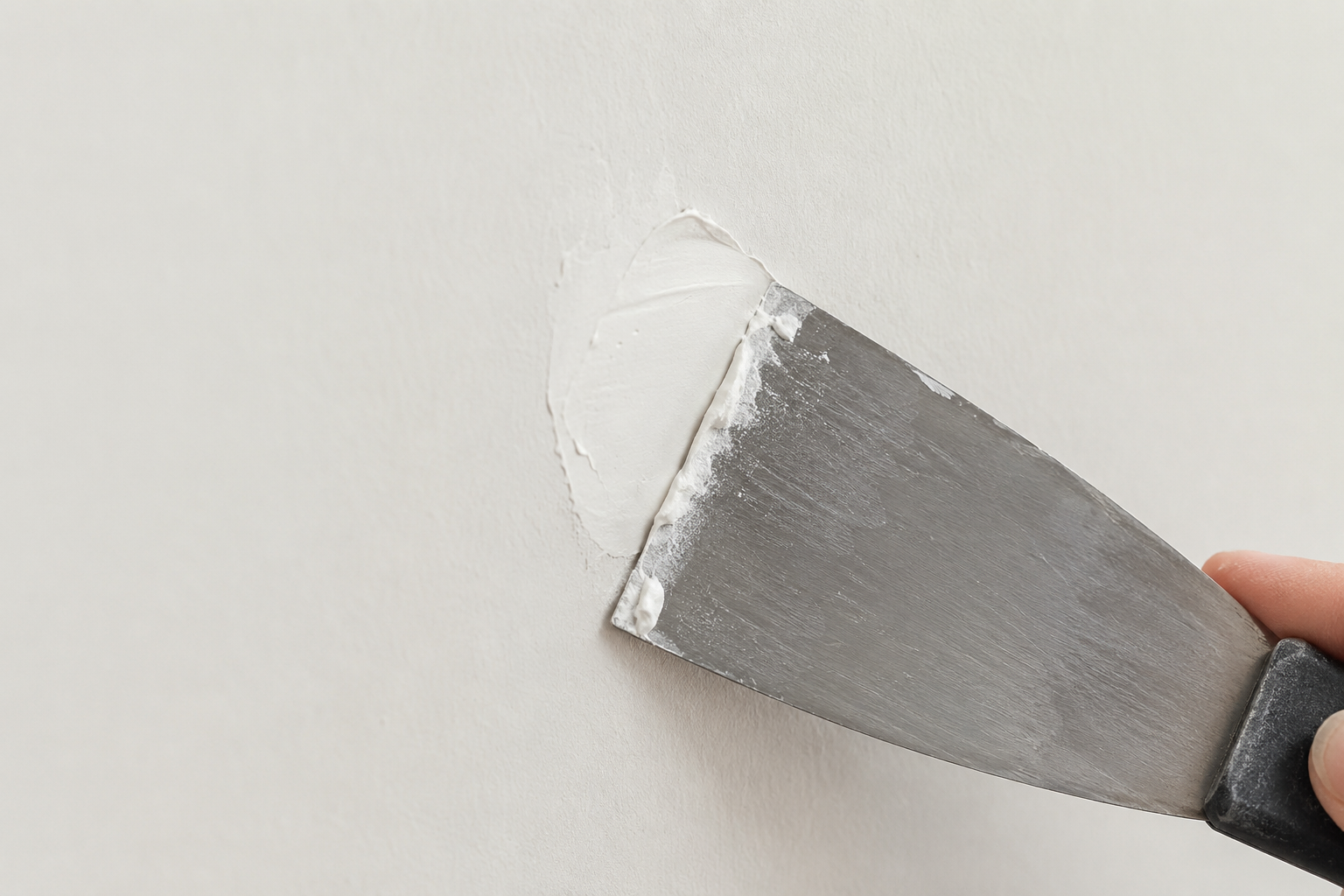
Prep for a flawless finish.
Fill nail holes and small cracks with spackle and smooth them with a putty knife before painting. This is what separates an amateur job from a pro one.
7. Sanding Block
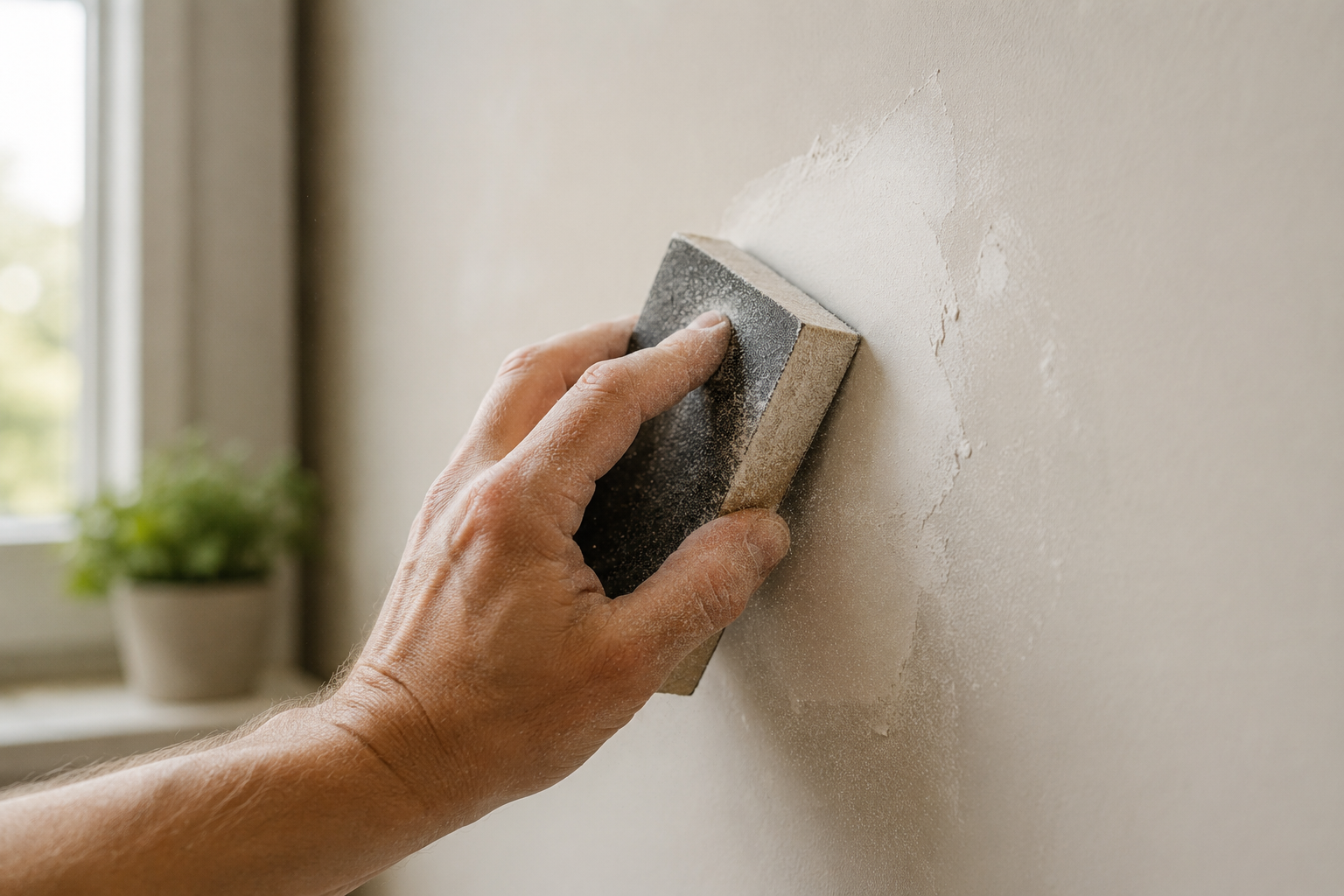
Smooth walls = smooth paint.
A quick sand over filled holes and rough spots gives you a perfectly smooth surface for paint to grip. Takes minutes, makes a huge difference.
Step-by-Step: How to Paint a Room
1. Prep the room Move furniture to the center, lay down your drop cloth, remove outlet covers.
2. Clean & repair Wipe walls down, fill holes with spackle, sand smooth once dry.
3. Tape the edges Apply painter's tape along trim, ceiling lines and window frames.
4. Cut in Use your angled brush to paint a 2–3 inch border along all edges and corners.
5. Roll the walls Load your roller and paint in a "W" pattern, then fill it in. Work in sections.
6. Apply a second coat Let the first coat dry fully (check the can), then repeat for even, rich color.
7. Remove tape & reassemble Peel tape while paint is slightly wet, let everything dry, then move furniture back.
Common Painting Mistakes to Avoid
Bottom Line
A fresh coat of paint is the cheapest, most dramatic upgrade you can make to any room.
The color sets the mood — but the right tools and the right process are what give you that clean, professional finish.
Get the tools right. Take your time with prep. And your walls will look like a pro did them.
Start with one room. You'll be amazed at the difference.
Shop the Full Painting Kit
Everything in this guide — in one place.
I've put together a complete Amazon idea list with every tool mentioned here. No searching, no comparing — just the exact products that make painting easier and the results cleaner.