
Bohemian bedroom design is the most personal of all interior styles. It has no strict rules, no mandatory color palette, no approved furniture list. What it does have is a clear feeling — layered, warm, eclectic but intentional, rich with texture and the sense that every object was chosen for a reason. This guide shows you exactly how to achieve that feeling, not by copying a Pinterest board, but by understanding the principles that make boho spaces work.
Start With a Neutral Base — Then Layer Everything
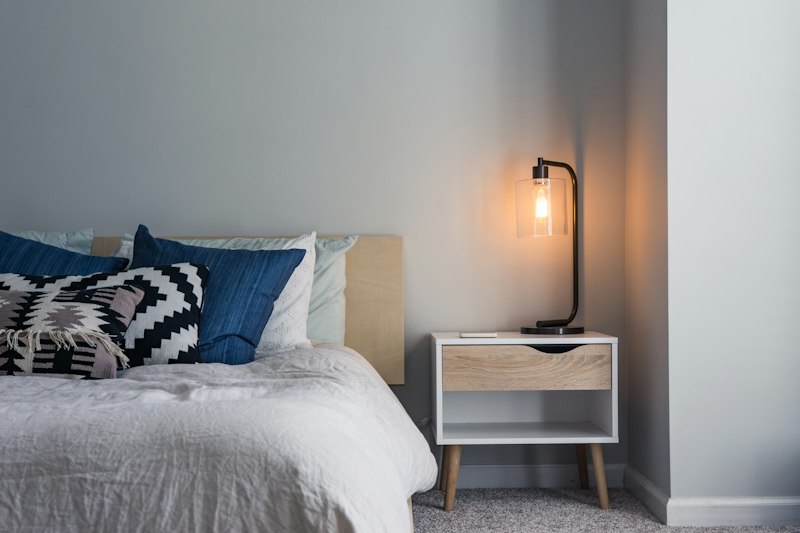
The most common mistake in boho bedroom design is starting with too much color. The walls, bedframe, and large furniture pieces should be neutral — white, cream, warm beige, or warm grey. This creates a calm foundation that allows the layers of pattern, texture, and color in textiles and accessories to shine without the room feeling chaotic.
Think of the neutral base as the canvas. Everything you place against it — a macramé wall hanging, a patterned rug, a stack of printed cushions — reads as intentional and curated rather than random. Without the neutral base, the same objects create visual noise instead of visual richness.
Your Boho Neutral Palette
Warm white or aged cream — walls and bedding base
Warm terracotta — accent cushions and pottery
Dusty sage — plants and occasional textile accent
Warm brown — wood furniture, rattan, wicker
Layer Textiles Like You Mean It — More Is More Done Right
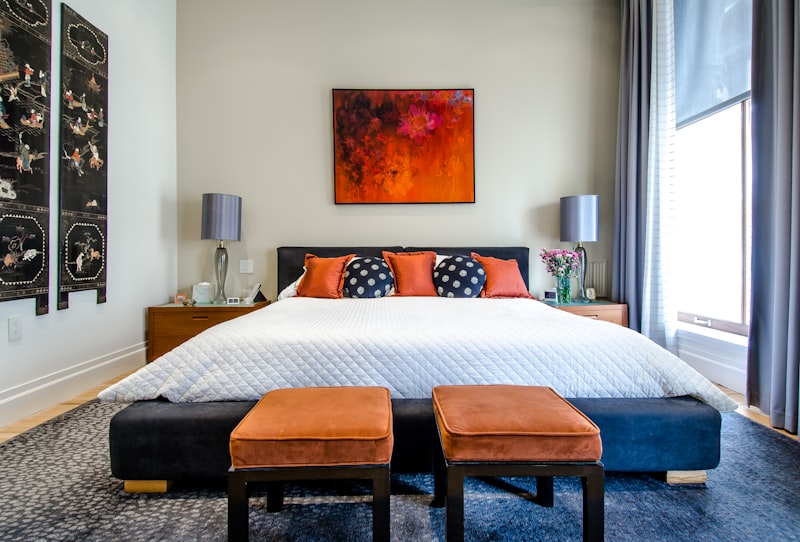
Textiles are the heart of boho bedroom design. The bed should have multiple layers — a fitted sheet, a flat sheet in a different texture, a duvet or quilt, and a throw draped asymmetrically at the foot. Cushions should be in odd numbers — three, five, or seven — in varying sizes, patterns, and textures that share a common color palette.
The key is mixing patterns without clashing. The rule: choose one dominant pattern, one complementary geometric, and one solid or near-solid. Keep them within the same color family. A large floral in terracotta and cream works with a small geometric stripe in the same tones and a plain burnt orange cushion — because all three share the warm, earthy palette.
The Boho Textile Formula
Linen or cotton base layer → Woven blanket → Quilted throw → 5 cushions (2 large, 2 medium, 1 small bolster) → One chunky knit or macramé decorative cushion. Every texture different, every color within the same warm family.
Rattan, Wood, Jute, Bamboo — Nature Is the Material Palette
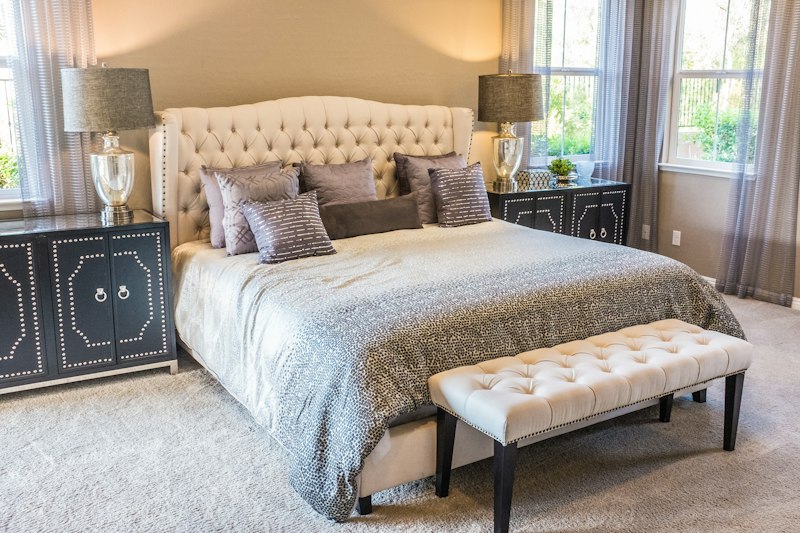
Boho design draws heavily from natural materials — rattan headboards, bamboo bedside tables, jute rugs, woven baskets, driftwood, and unfinished wood. These materials add organic texture and warmth that manufactured finishes cannot replicate. They also age beautifully, developing character over time rather than looking worn.
A rattan headboard is the single fastest way to create a boho aesthetic in any bedroom. It brings instant warmth, texture, and that distinctive handmade quality that defines the style. Pair it with dark wood bedside tables — mismatched heights and styles are acceptable and even desirable in boho design. The intentional mix reads as collected, not careless.
The Boho Wall — Layered, Personal, Never Empty
A boho bedroom wall above the bed is one of the most expressive spaces in the home. Unlike minimal interiors where one carefully chosen piece is the rule, boho walls invite layering — a macramé hanging, a small gallery of framed prints, a string of lights, a dried pampas grass arrangement, perhaps a small mirror. The result should feel personal and collected over time, not purchased as a set.
The key restraint is consistency of tone. All the elements on the wall should share a warm, earthy color palette. Mix sizes, shapes, and materials freely — but keep the colors coherent. A macramé in natural cotton, prints with terracotta and botanical themes, and a round rattan mirror all speak the same visual language even though they are entirely different objects.
Boho Wall Elements That Always Work
Plants Are Not Optional in a Boho Bedroom — They Are Essential
Every boho bedroom that works has plants. Not fake plants — real ones. The organic, irregular shapes of living plants add the one element that no manufactured object can replicate: genuine life. A trailing pothos on the bedside table, a monstera in the corner, a small succulent arrangement on the windowsill. The more the better, provided the room has enough natural light to support them.
The containers matter as much as the plants. Terracotta pots in natural finish, woven baskets used as pot covers, and ceramic vessels in matte earth tones all extend the material palette of the room into the plant collection. Avoid plastic nursery pots left visible — always pot up or cover them.
“The boho bedroom is not designed — it is grown. Every plant, every textile, every found object adds one more layer to a space that tells a story.”
Ready to Build Your Boho Bedroom?
Start with a neutral base, add one rattan or natural material piece, then layer textiles one at a time. Build slowly — boho interiors that feel authentic are never finished in a weekend.