
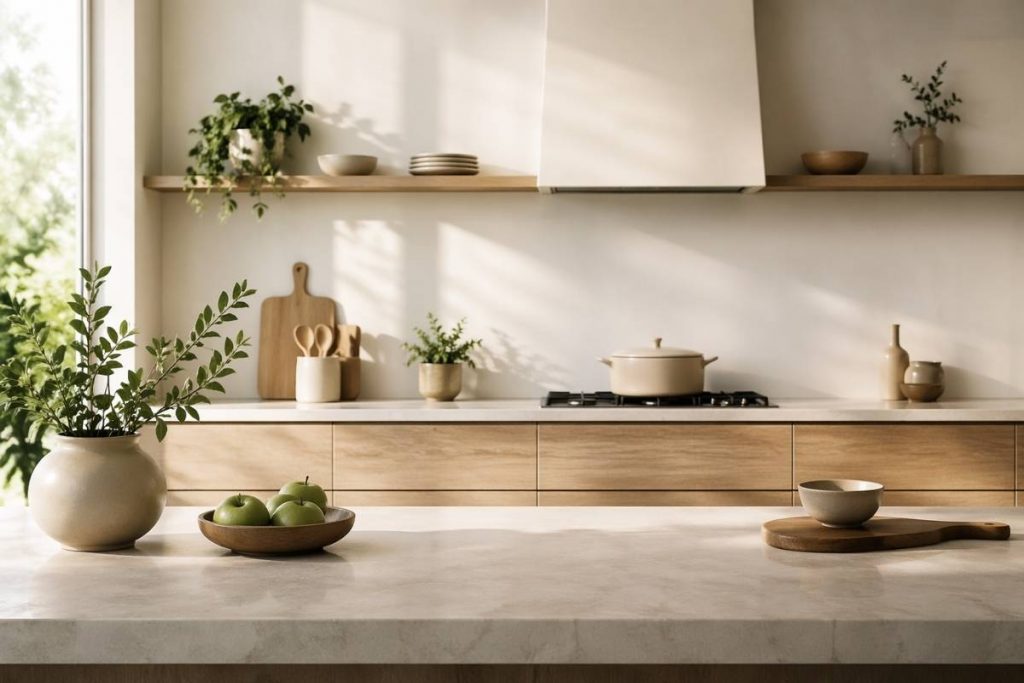
A well-designed kitchen isn’t just about aesthetics—it directly affects how you think, move, and function. Most kitchens feel overwhelming not because they lack space, but because they contain too much friction: visual noise, poor layout decisions, and unnecessary complexity.
This guide breaks down what slows you down and how to rebuild your kitchen into a clean, minimal system that supports clarity and ease.
What Creates Friction in Kitchen Decor?
Friction is anything that interrupts flow, adds micro-decisions, or creates subtle stress while you cook or move through the space.
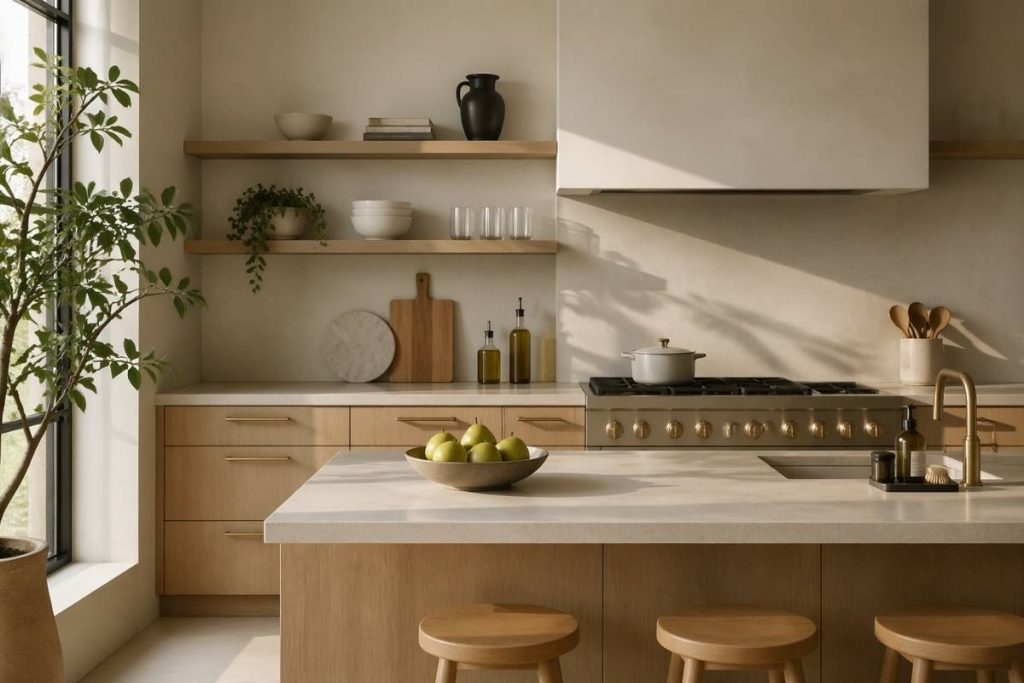
1. Visual Overload
Too many colors, textures, and objects competing for attention.
- Open shelves packed with mismatched items
- Excess decor on countertops
- Busy backsplashes or patterns
Effect: Your brain constantly processes unnecessary stimuli, leading to faster mental fatigue.
2. Countertop Clutter
When surfaces are filled, every task requires adjustment.
- Appliances left out “just in case”
- Utensil holders overflowing
- Random items without a fixed place
Effect: Cooking becomes slower because you’re always clearing space before starting.
3. Inefficient Layout
Poor placement creates extra steps and interruptions.
- Frequently used items stored too far away
- Disconnected work zones (sink, stove, prep area)
- Drawers that don’t match how you actually cook
Effect: More movement, more effort, less flow.
4. Decision Fatigue
Too many choices slow you down.
- Multiple versions of the same tool
- Overloaded spice collections
- Excess dishware
Effect: Small decisions accumulate and drain focus.
5. Hidden Disorganization
Clutter inside cabinets still affects your behavior.
- Overstuffed drawers
- No categorization
- Items hard to access
Effect: You avoid using certain tools or waste time searching.
The Goal: A Kitchen That Feels Effortless
A minimal kitchen isn’t empty—it’s intentional.
Every item has:
- A clear purpose
- A defined place
- Easy accessibility
The result: less thinking, smoother movement, and a calm visual environment.
Step 1: Reset the Visual Field
Start by reducing what your eyes have to process.
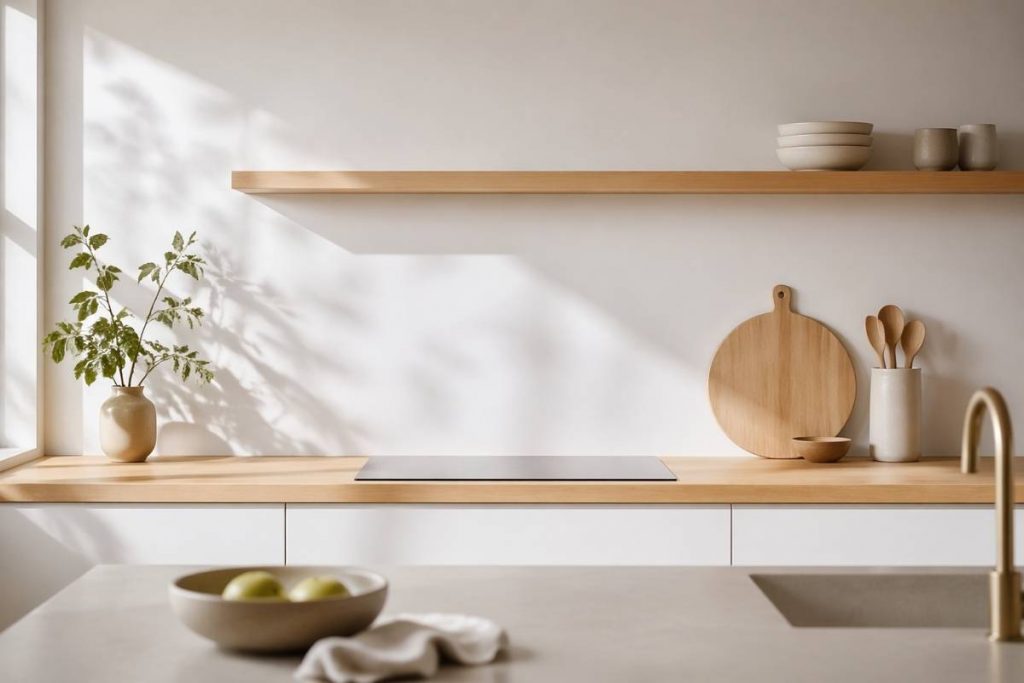
Keep Surfaces Nearly Empty
Only leave out what you use daily.
Examples:
- One cutting board
- One frequently used appliance (e.g., kettle)
- A single neutral container for essentials
Everything else goes inside cabinets.
Simplify Color and Materials
Stick to a tight palette:
- 2–3 main colors (e.g., white, wood, black)
- Consistent materials (avoid mixing too many finishes)
Result: Immediate sense of calm and order.
Step 2: Remove Functional Friction
Design the kitchen around how you actually use it.
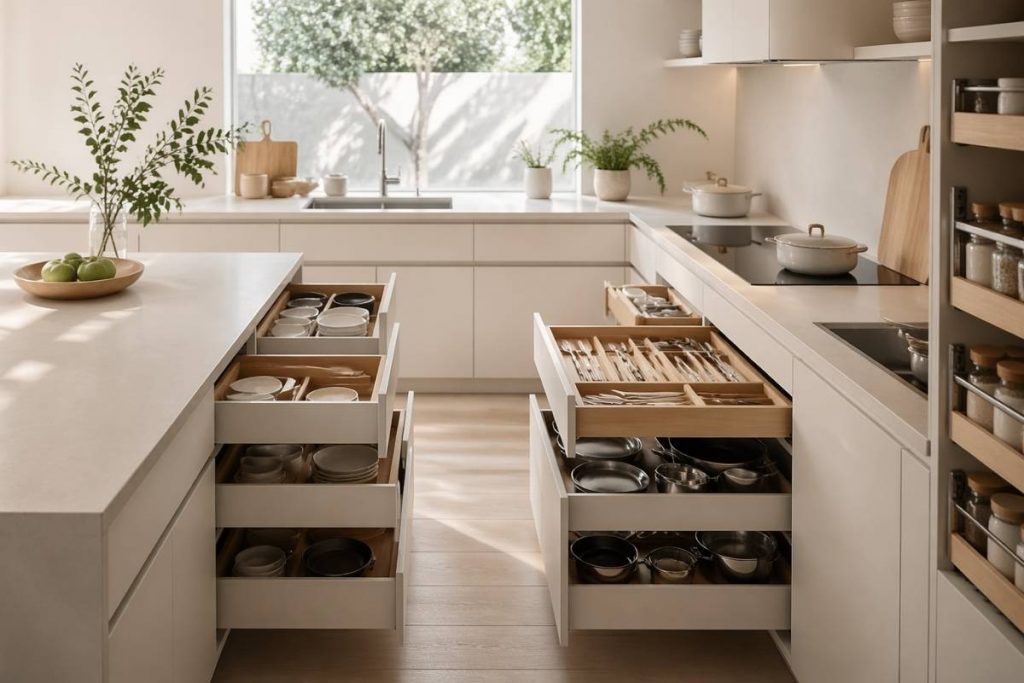
Create Clear Zones
Divide your kitchen into simple functions:
- Prep Zone: knives, cutting boards
- Cooking Zone: pans, oils, spices
- Cleaning Zone: sink, towels, detergents
Keep everything within arm’s reach of its zone.
Reduce Movement
Ask: How many steps does this task require?
- Store spices near the stove
- Keep trash accessible from prep area
- Place everyday dishes close to the dishwasher
Goal: Minimize unnecessary walking and reaching.
Step 3: Eliminate Redundancy
Most kitchens have duplicates that add zero value.
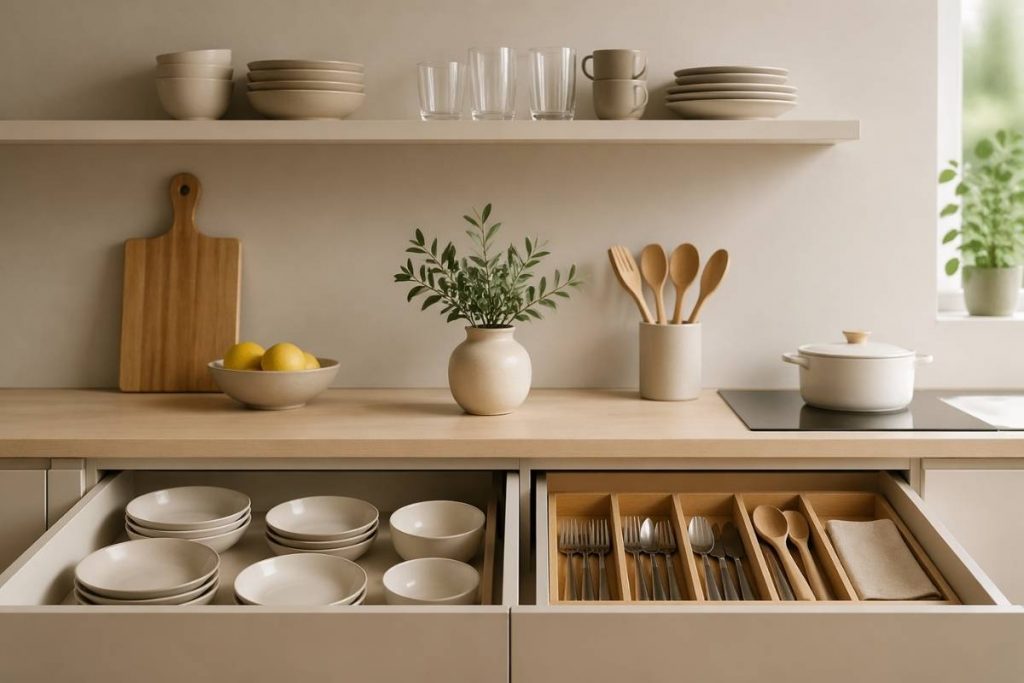
Apply the “One Good Version” Rule
Keep:
- One chef’s knife
- One primary pan
- One set of everyday dishes
Remove:
- Low-quality backups
- Rarely used gadgets
- “Maybe someday” items
Result: Fewer decisions, faster actions.
Step 4: Simplify Storage Systems
Hidden clutter still creates friction.
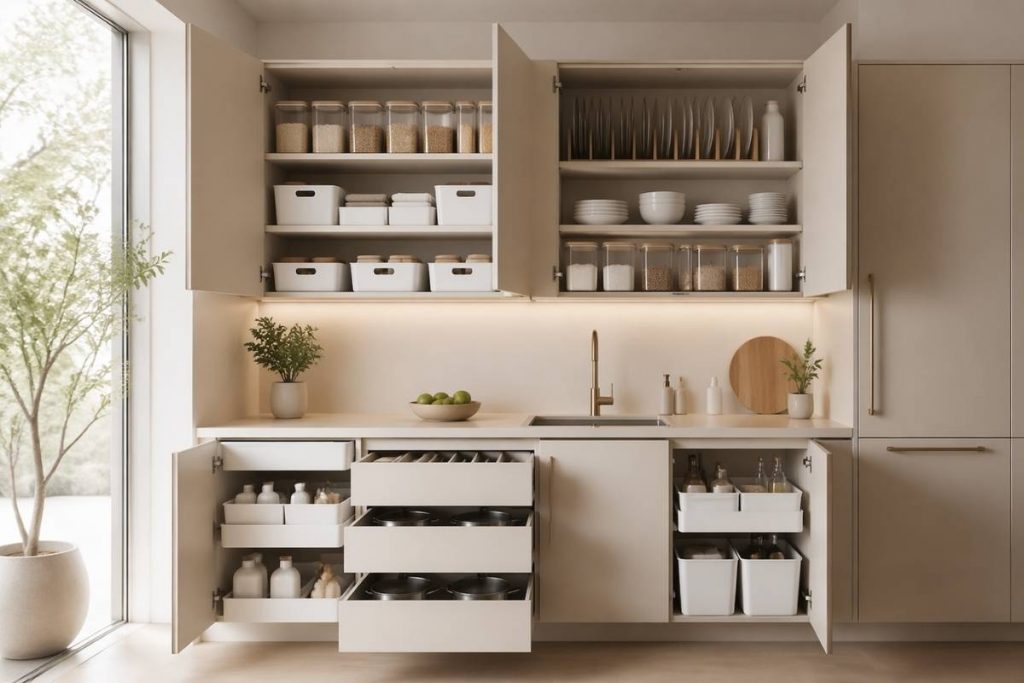
Use Clear Categories
Assign each drawer a single purpose:
- Utensils only
- Cooking tools only
- Food storage only
Avoid mixing categories.
Prioritize Accessibility
- Frequently used items → easiest to reach
- Rarely used items → higher or deeper storage
If something is hard to access, you won’t use it.
Step 5: Introduce Controlled Warmth (Minimal Decor)
Minimal doesn’t mean sterile—it means intentional.
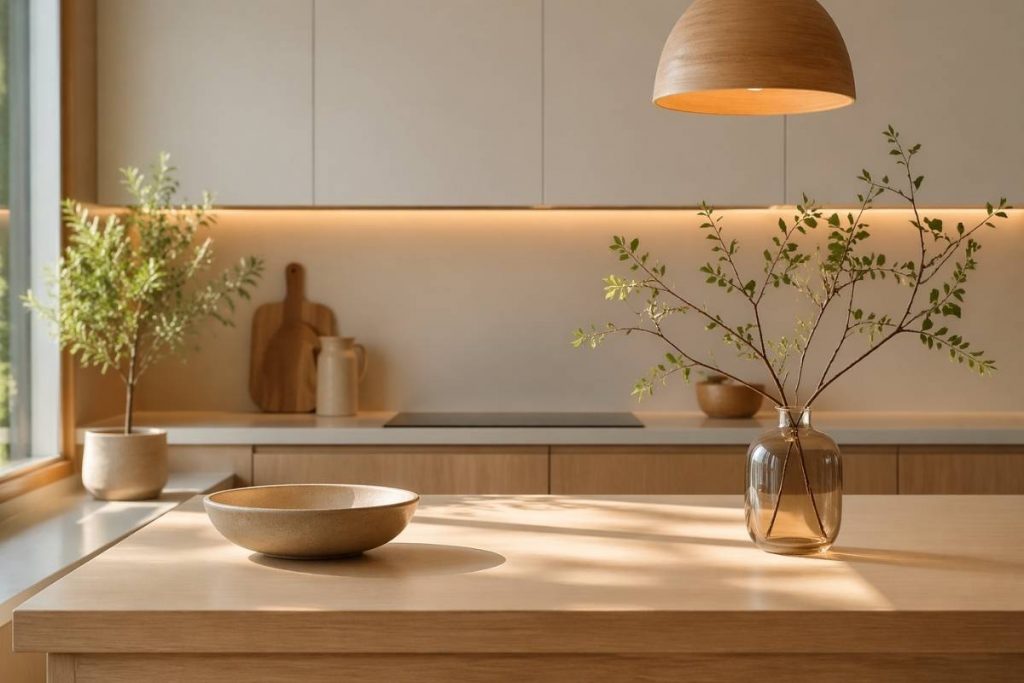
Add 1–2 Calm Elements
Examples:
- A small plant
- A wooden tray
- A neutral ceramic bowl
These should enhance, not dominate.
Avoid Decorative Clutter
Skip:
- Multiple small objects
- Loud statement pieces
- Trend-driven decor
Rule: If it doesn’t improve function or calm, remove it.
Step 6: Build Maintenance Into the System
A frictionless kitchen stays that way because it’s easy to reset.
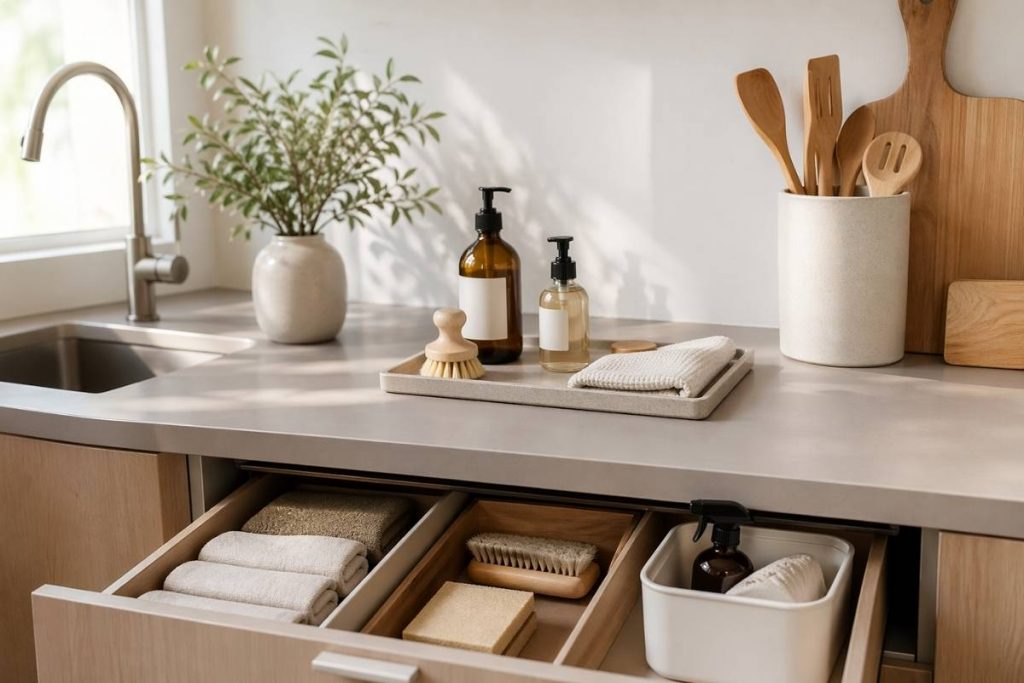
Daily Reset (2–3 minutes)
- Clear counters
- Return items to their zones
- Wipe surfaces
Weekly Check
- Remove anything that drifted out of place
- Reassess unused items
Key Principle: Maintenance should feel automatic, not effortful.
Final Outcome: A Kitchen That Supports You
When friction is removed, everything changes:
- Cooking feels faster and more intuitive
- The space looks calm without trying
- You spend less time organizing and more time using
Minimal kitchen decor isn’t about having less—it’s about removing everything that gets in your way.
The result is clarity, both in your space and in your mind.