
You don’t usually think of your bathroom as stressful.
But every morning starts the same way—reaching, moving, searching.
A bottle falls.
The drawer sticks.
Nothing has a clear place.
It’s subtle, but constant: visual noise, micro-friction, decision fatigue.
And over time, that feeling translates into something deeper — a sense that your space is never quite under control.
Table of Contents
Why Your Current Setup Keeps You Stuck
Most bathrooms aren’t designed for how you actually live.
They’re filled reactively:
- One shelf becomes three
- One product becomes ten
- Storage gets added, not structured
The result?
Everything is visible, but nothing is intentional.
Common patterns that create the problem:
- Horizontal stacking → items hide behind each other
- Mixed categories → skincare, tools, and backups all blended
- No access hierarchy → daily items compete with rarely used ones
You don’t have a storage problem.
You have a system problem.
The Shift: From Storage to Structure
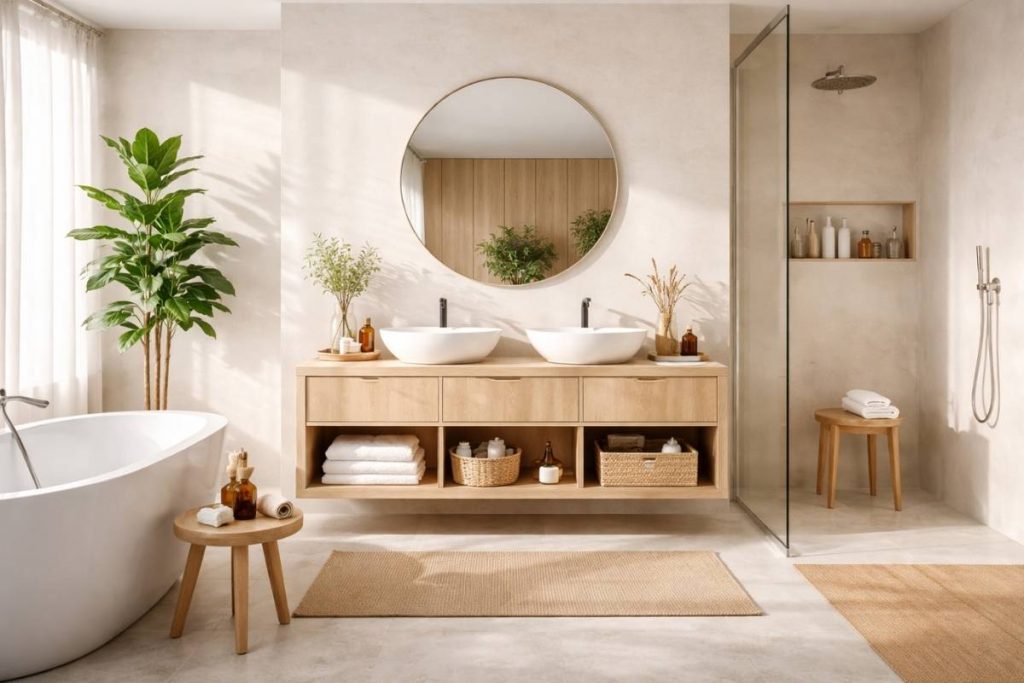
Minimal bathrooms don’t have fewer things by accident.
They follow one principle:
Everything you use daily should be instantly accessible—and everything else should disappear.
This isn’t about aesthetic minimalism.
It’s about removing friction from your routine.
When done right:
- Your mornings feel faster
- Your space feels lighter
- Your mind feels clearer
1. Reset the Surface: Protect Your Visual Space
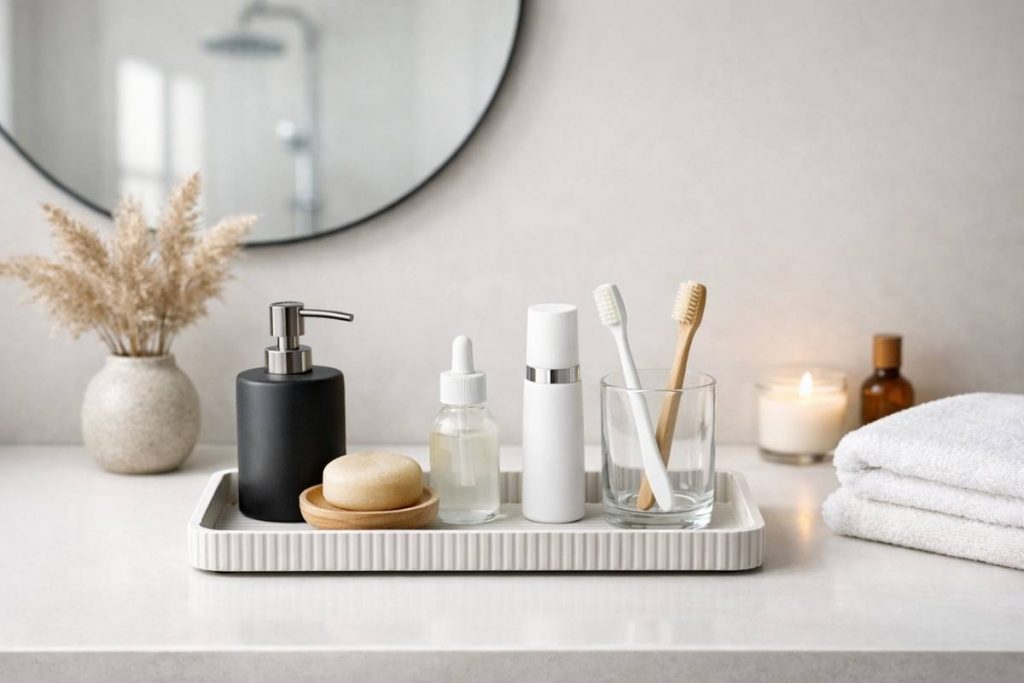
Your countertop defines how your bathroom feels.
Rule:
Only keep what you use every single day.
Everything else goes off the surface.
Upgrade:
- Use one structured tray instead of loose items
- Limit to 3–5 essentials (e.g. toothbrush, soap, skincare core)
- Leave intentional empty space
Result:
Your bathroom instantly feels calmer—without removing functionality.
2. Create Zones Inside Drawers (Not Piles)
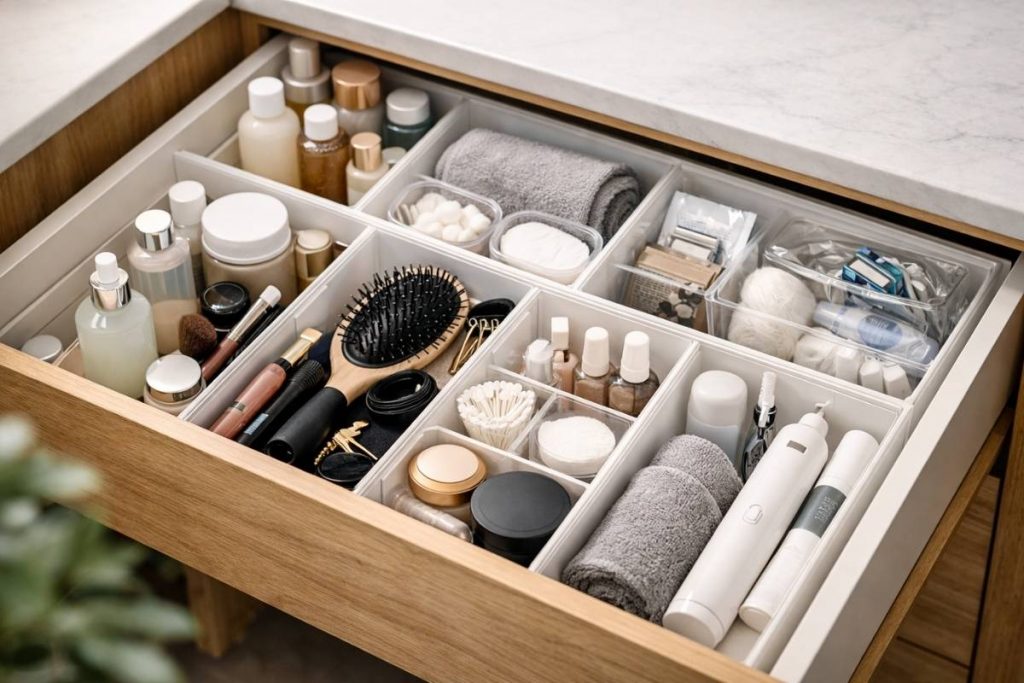
Drawers fail when they become “catch-all” spaces.
Fix the structure, not the contents.
Divide into 3 clear zones:
- Daily use (front, easiest reach)
- Secondary (weekly items)
- Backup (hidden or separate)
Use simple dividers—not to store more, but to reduce decisions.
Result:
You stop searching. Everything has a predictable place.
3. Use Vertical Space Intentionally
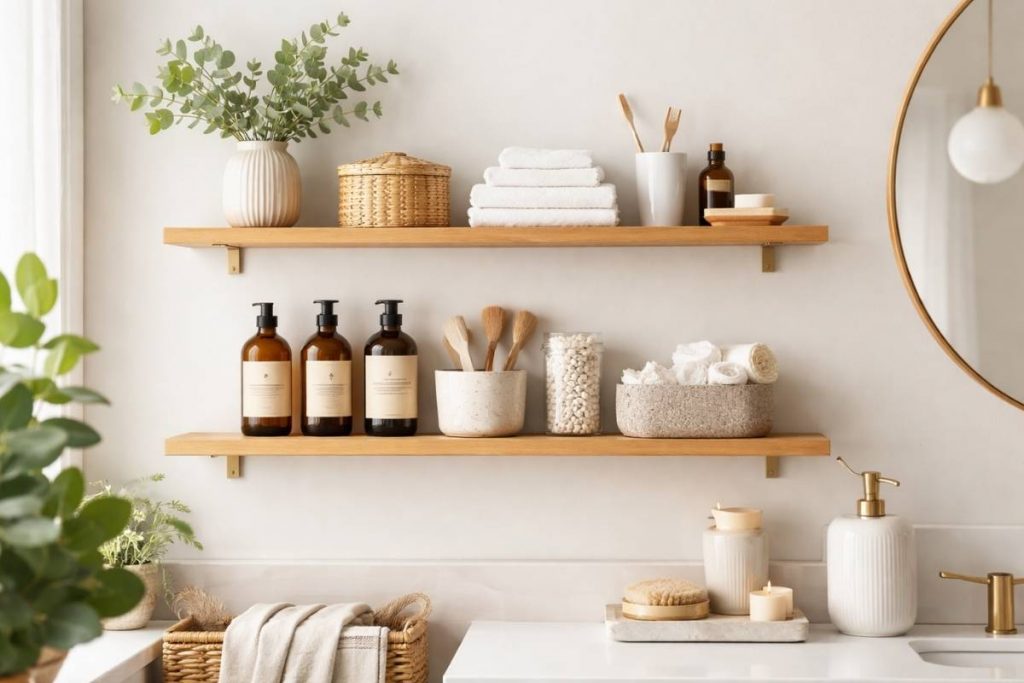
Most bathrooms waste vertical potential—or overuse it.
The goal isn’t more shelves.
It’s controlled elevation.
Apply this:
- One or two clean wall shelves max
- Group items by category (not by size)
- Keep spacing between objects
Avoid overcrowding—vertical clutter feels even heavier than horizontal clutter.
Result:
Your space feels taller, lighter, more breathable.
4. Hide the Backups (This Changes Everything)
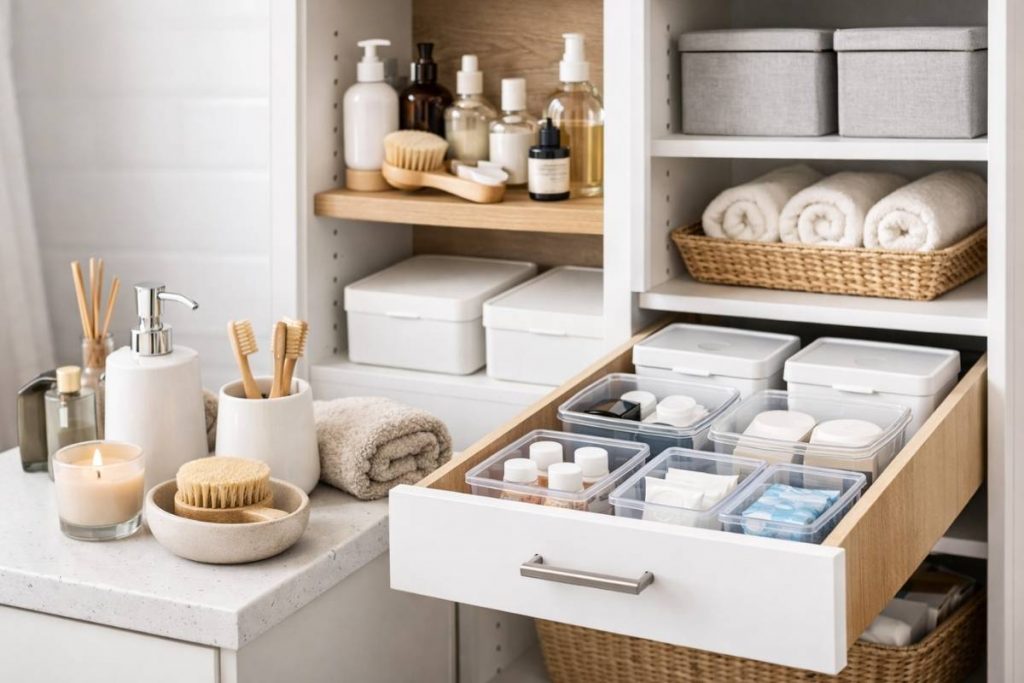
Duplicates create invisible stress.
Seeing five products—even if useful—signals unfinished decisions.
Solution:
- Move backups completely out of sight
- Use bins or closed containers
- Store by category (not random grouping)
If you can’t see it daily, it stops competing for attention.
Result:
Your bathroom starts to feel intentional—not overloaded.
5. Design Your Routine, Not Just Your Storage
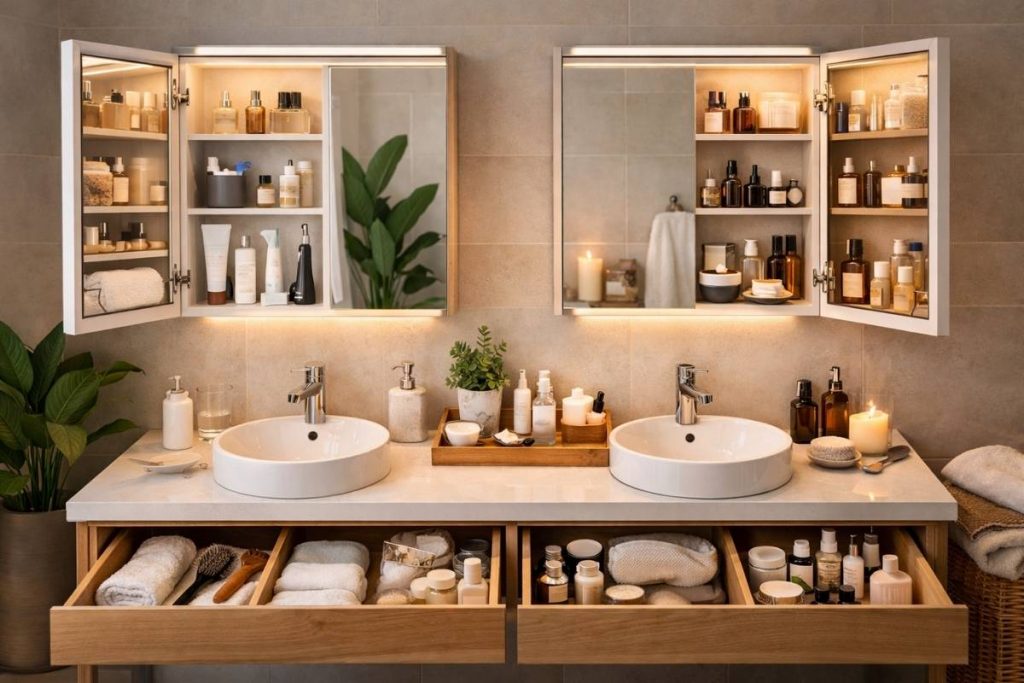
This is where everything connects.
Ask one question:
“What do I actually use in a normal day?”
Then build your layout around that flow.
Example:
- Morning → face wash, toothbrush, moisturizer
- Evening → add skincare steps
Everything else becomes secondary.
This is the real upgrade:
Your space begins to support your life—not interrupt it.
What Changes When You Get This Right
A well-structured bathroom doesn’t just look better.
It changes how your day starts and ends:
- Less friction
- Fewer decisions
- More calm
And most importantly:
You stop feeling like you’re managing your space.
It starts working for you.